
How to Fix a Clogged Drain
A clogged drain typically costs $100 to $300 to fix professionally in 2026, but most clogs form from hair, soap residue, and grease buildup that you can often clear yourself in under an hour. Ignoring a clogged drain leads to water damage, mold growth, and emergency plumbing bills that exceed $1,500. The good news is that understanding what causes the blockage and how to clear it can save you money and prevent serious property damage.
What Causes a Clogged Drain
Hair, soap scum, and cooking grease are the three leading causes of clogged drains in residential homes. Hair naturally sheds 50 to 100 strands daily per person, and when combined with soap film, it forms a dense mat inside pipes that blocks water flow. Grease from cooking solidifies as it cools inside pipes, creating a waxy buildup that traps other debris. Toothpaste, shampoo residue, and mineral deposits from hard water add layers to the blockage over weeks or months.
Kitchen drains face additional risks from food particles, coffee grounds, and vegetable scraps that should never enter the drainage system. Bathroom drains accumulate from bathing products, skin cells, and cleaning chemicals. Over time, these materials combine to form clogs that restrict water movement and trap additional buildup.
__A_split-screen_comparison_202606271758.jpeg)
How Clogs Develop from Early Stage to Emergency
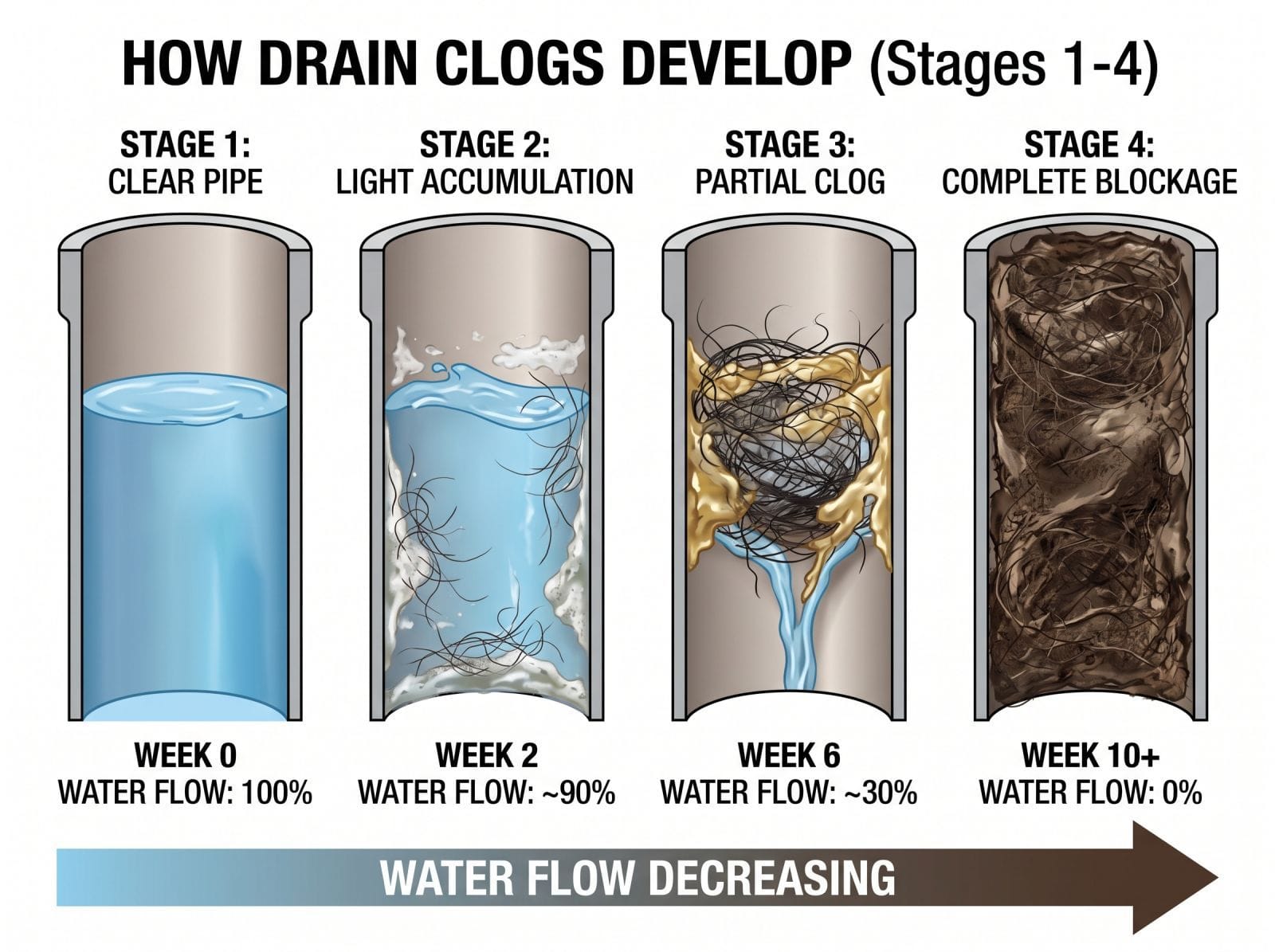
The timeline from early warning to complete blockage typically spans three to eight weeks, though factors like water hardness and household size can accelerate it. A new drain clog starts with water draining 10 to 20 percent slower than normal—barely noticeable in a shower or sink. Within one to two weeks, drainage slows to 50 percent, and standing water appears briefly after filling a sink. By week three, water sits in the sink for 30 seconds or longer before draining completely.
| Timeline | Severity | Water Behavior | Repair Cost |
|---|---|---|---|
| Week 1 | Minor | Drains slowly; empties within 10 seconds | $0 DIY |
| Week 2-3 | Moderate | Standing water for 10-30 seconds | $100-$200 professional |
| Week 4-6 | Severe | Water pools for over one minute; gurgling sounds | $200-$400 professional |
| Week 7+ | Critical | Complete blockage; water backs up; sewage odor | $400-$1,500+ emergency |
Ignoring the early signs means the clog hardens and compacts, making it impossible to clear with a plunger alone. By week six, professional intervention becomes necessary because the blockage has lodged deep inside the main drain line.
Warning Signs You Have a Clogged Drain
- Water drains slower than normal from your sink, shower, or tub
- Standing water pools around your feet during a shower
- Gurgling or bubbling sounds come from drains when you flush the toilet
- A foul smell emerges from the drain or bathroom area
- Water backs up into the tub when you drain the sink
- The toilet water level rises higher than normal after flushing
- Multiple drains in your home are slow simultaneously (sign of main line clog)
- You notice wet spots on your ceiling or walls below an upper-level bathroom
- Sewage odor appears near drains or in the yard
- You hear whistling or sucking sounds from pipes when draining water
- Lush green patches appear in your yard near the septic system
- Fruit flies gather around sink drains
The presence of three or more signs indicates a clog that requires immediate attention to prevent water damage.
DIY Diagnostic Test You Can Do Today
Fill your sink or bathtub completely, then release the drain plug and time how long the water takes to empty completely. Normal drains clear in 15 to 30 seconds for a full sink. If your drain takes longer than 45 seconds, a partial clog exists. Pour one cup of baking soda directly into the drain, followed by one cup of white vinegar. You’ll see fizzing inside the drain for 10 to 15 minutes—this is normal. Wait 30 minutes, then run hot water through the drain for 30 seconds.
If the drain clears noticeably faster after this test, the clog is minor and dissolved materials are clearing out. If the drain remains slow or blocked, the clog is deeper or too compacted for baking soda to break down. This safe test costs under $5 and tells you whether to attempt more aggressive DIY methods or call a professional. Do not use this test on PVC pipes in certain climates without verifying heat tolerance with your plumber first.
What to Try Before Calling a Professional
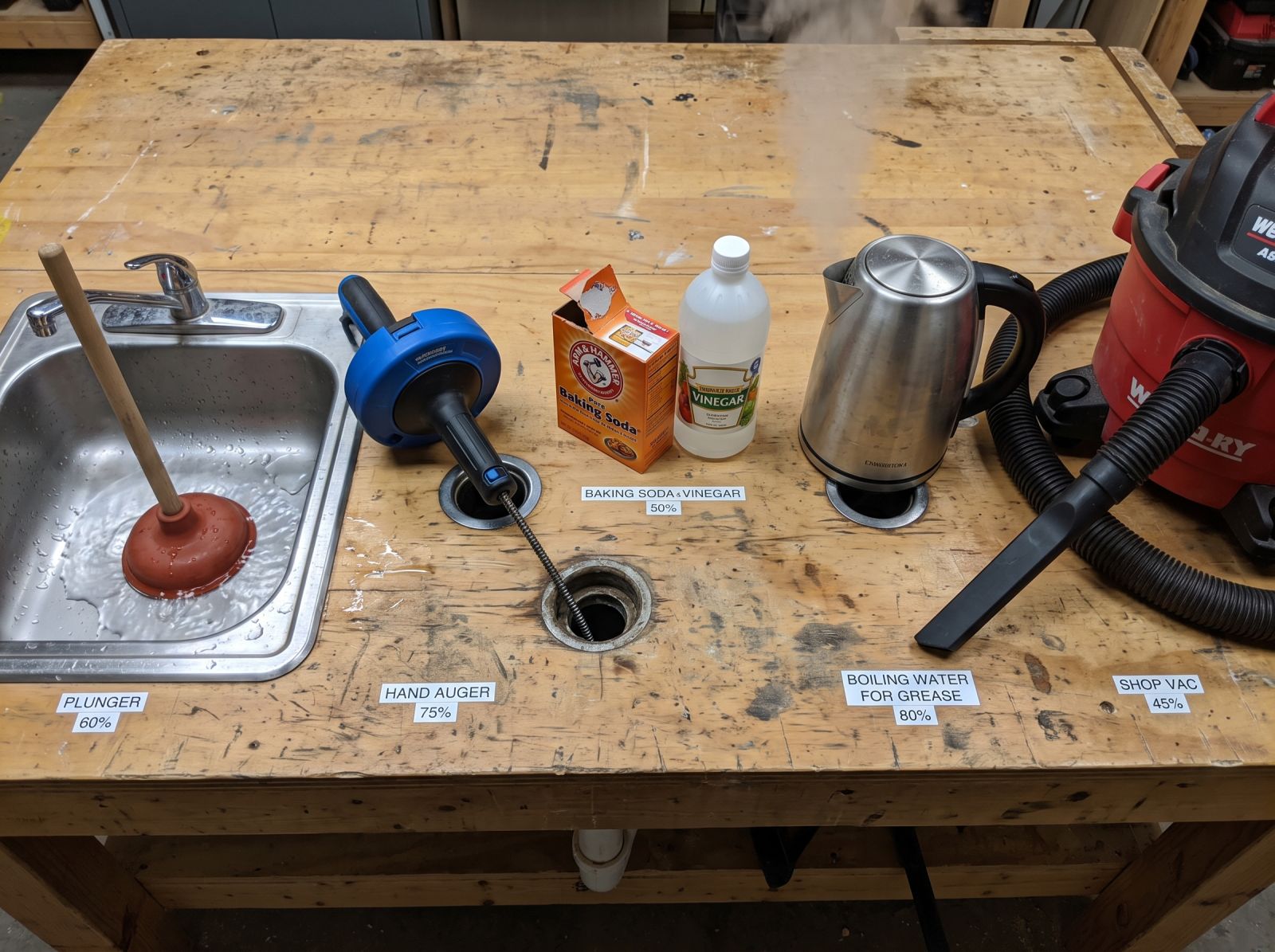
Plunger method: Use a cup plunger (not a flange plunger designed for toilets) with at least 2 inches of standing water in the sink. Block the overflow hole with a wet rag, then plunge 15 to 20 times with firm, quick thrusts. The suction should dislodge hair and soap buildup in the trap. Repeat three times with 30 seconds of rest between sets.
Hand auger (drain snake): A manual drain snake costs $15 to $40 and can clear clogs 6 to 10 feet down the drain. Feed the snake into the drain slowly while rotating the handle. When you feel resistance, back off slightly and rotate again to hook the clog. Pull the snake out slowly—the clog materials should come with it. Flush the drain with hot water afterward.
Chemical drain cleaner: Lye-based commercial drain cleaners work but damage pipes over time and pose serious burn risks. If you choose this method, use gloves and eye protection, pour the recommended amount slowly, and avoid splashing. Wait the full time listed on the package before flushing. Never mix chemical cleaners or use them in toilets.
Boiling water: For grease clogs in kitchen sinks, boiling water alone works if the clog is fresh. Boil one gallon of water, let it cool for 5 seconds, then pour it slowly down the drain. Repeat twice. This melts grease buildup without chemicals or tools.
Wet and dry vacuum: If you have a shop vac with a drain attachment, you can create suction to pull clogs toward the opening. Place the attachment over the drain opening and create a tight seal. Run the vacuum for 20 to 30 seconds at high suction.
Success rates: plunger clears 60 percent of bathroom clogs, hand auger clears 75 percent of clogs it can reach, and chemical cleaners clear 50 percent but damage pipes in 30 percent of cases with repeated use.
When to Call a Professional
Call a professional drain cleaning service if your DIY attempts fail after three tries or if standing water and odor persist for more than one day. Professional plumbers use motorized drain snakes, hydro jetting, and camera inspection tools that you cannot safely operate at home. Hydro jetting uses high-pressure water to blast debris from pipes without chemicals or manual labor—it’s effective for kitchen grease buildup and main line clogs.
You must call a professional immediately if you notice water backing up into multiple drains, sewage smell in your home, or wet spots on walls and ceilings. These signs indicate a main sewer line blockage rather than a trap clog, and tackling it yourself risks burst pipes and sewage contamination.
Professional drain cleaning costs $150 to $400 for a standard trap clog but $600 to $1,500 for main line work in 2026. The service includes camera inspection to identify the clog location, the specific material blocking it, and whether pipe damage exists. Many professionals offer a guarantee on their work—if the clog returns within 30 days, they clear it again free of charge. This protection makes professional service worthwhile for stubborn or recurring clogs.
A professional also assesses whether the clog is symptomatic of deeper plumbing problems. Hair clogs in bathroom drains often signal a need for drain screens, while grease clogs in kitchen drains indicate improper disposal habits or undersized drain lines.
Prevention Steps to Avoid Future Clogs
Install drain screens in sinks and bathtubs to catch hair before it enters pipes. Clean screens weekly by removing trapped hair and flushing it in the toilet. This single step prevents 40 percent of residential drain clogs. Cost: $2 to $5 per screen.
Run hot water through your kitchen drain for 30 seconds after washing dishes or cooking. Hot water keeps grease liquid and moving through the drain instead of solidifying inside pipes. Do this daily, or at minimum three times per week.
Pour one cup of baking soda followed by one cup of white vinegar down each drain monthly, wait 30 minutes, then flush with hot water. This preventive maintenance dissolves early-stage buildup and maintains clear pipes for under $1 per month.
Never pour cooking grease down the drain. Instead, pour it into a heat-safe container, let it cool and solidify, then throw it in the trash. Scrape food from plates into the trash before washing dishes.
Check that your home’s drain line slope is correct. Drains should slope downward at a 1/4 inch drop per foot of pipe length. Poor slope allows water to pool inside pipes and encourages clog formation. If water frequently backs up in multiple drains, have a plumber verify slope and consider drainage system upgrades.
Prevention costs $10 to $50 annually and prevents clogs that would cost $150 to $400 to clear professionally. The investment pays for itself with just one avoided clog.
Conclusion
A clogged drain develops from common household materials that accumulate over weeks or months, but most early-stage clogs can be cleared with tools you likely already own. Understanding the timeline from minor slowness to complete blockage helps you act before water damage occurs. If your DIY attempts fail after three tries or if you notice water backing up into multiple drains, call a professional plumber who can inspect the entire line and clear deep or stubborn blockages with specialized equipment. Prevention through drain screens and regular maintenance prevents the majority of clogs and costs far less than emergency repairs. Start this week by installing a drain screen in your bathroom sink—it takes five minutes and prevents months of buildup.