
How to Fix a Faulty AC Thermostat in Dubai?
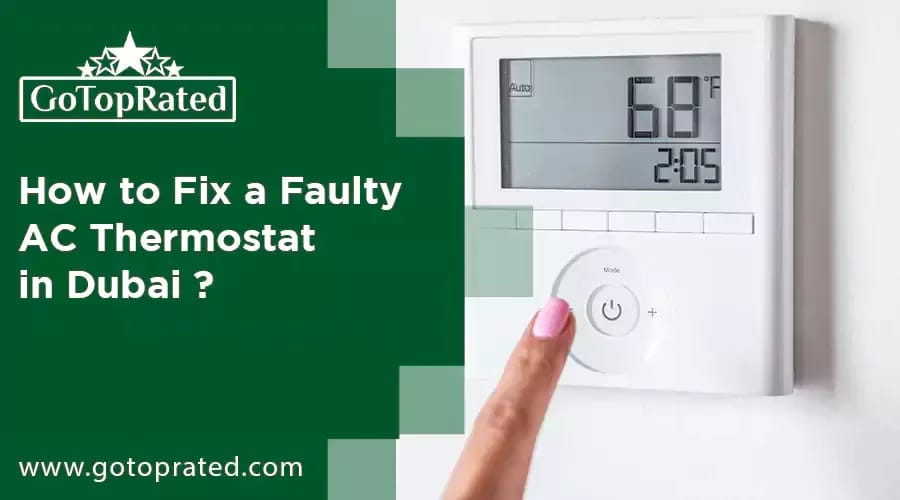
A Step-by-Step Guide
The extreme climate conditions in Dubai create difficulties for efficient air conditioning operations through unacceptable thermostat breakdowns that decrease system performance while raising utility expenses. The thermostat controls enable the air conditioner system to start or stop by temperature activation. Early signs of thermostat malfunction appear through inconsistent cooling performance or an entirely stopped cooling operation. The article provides specific testing procedures for homeowners to recognize thermostat breakdowns, saving expenses and waiting time before contacting professional help.
Understanding the Role of a Thermostat
Your air conditioning system controls operate like the central processing unit of your home climate management system. The thermostat detects environmental temperatures before it conveys this information to your Air Conditioning Unit for climate regulation purposes. Thermostat malfunction may result in fluctuating temperatures, increased energy costs, or total air conditioning breakdown.
Signs of a Faulty Thermostat
Before jumping into repairs, be sure you're dealing with a thermostat issue. Here are tell-tale signs:
| Symptom | Possible Thermostat Problem |
|---|---|
| The room temperature doesn't match the setting | Sensor malfunction or calibration error |
| The AC turns on/off too frequently | Wiring issue or bad placement |
| AC doesn’t respond at all | Dead batteries or complete thermostat failure |
| Blank or flickering display | Power issue or internal damage |
| Short cycling (frequent on/off) | Sensor miscommunication or wiring fault |
| The AC turns on/off at the wrong time | Misplaced thermostat, bad programming |
Basic Tools Checklist
| Tool | Purpose |
|---|---|
| Screwdriver | For opening the thermostat housing |
| Multimeter | To test electrical continuity |
| Soft brush or compressed air | For cleaning dust and debris |
| Smartphone | To take photos before removing wires |
| Replacement batteries | For battery-operated units |
| Cleaning cloth | For cleaning purposes |
| New thermostat (optional) | If replacement is required |
Safety Precautions before Starting
- Always turn off the power at the circuit breaker before handling electrical components.
- Use insulated tools to avoid accidental shocks.
- Work in a well-lit area and keep water or wet hands away from electric parts.
Step-by-Step Guide to Fixing Your AC Thermostat in Dubai
Step 1: Turn Off the Power
Safety first. The first step is to locate your circuit breaker then flip the power switch to your HVAC System to prevent electrical hazards. Any attempt to fix the system should be postponed until you cut off the power supply through circuit breakers.
Pro Tip: If you're unsure which breaker controls the AC, temporarily turn off the main power switch.
Step 2: Check the Thermostat Settings
- Make sure the thermostat is set to “cool” and not “heat” or “off.”
- Ensure the temperature is set lower than the current room temperature.
- Verify fan settings: Try switching from “auto” to “on” to test the response.
Step 3: Inspect the Display and Power Supply
- Replace batteries with fresh ones.
- Ensure the circuit breaker hasn’t tripped.
- Remove the cover and look for loose or corroded wiring.
Step 4: Clean the Interior Components
Dubai's dusty environment can cause dirt buildup inside the thermostat. Use a soft brush or compressed air to gently clean:
- The sensor
- Internal connections
- Circuit board (avoid direct contact)
Tip: Avoid using water or alcohol. Dusting should be done carefully to prevent damage to the internal electronics.

Step 5: Calibrate the Thermostat Sensor
Sometimes the thermostat sensor becomes inaccurate over time. Here's how to fix it:
- Use a room thermometer and compare it with the thermostat’s reading.
- If there's a 2-3°C difference, calibration may be required.
- On some digital models, you can access calibration settings in the menu.
- For manual thermostats, adjust the temperature dial internally.
Step 6: Check Wiring Connections
Loose or broken wires are common causes of thermostat malfunction in homes across Dubai. Follow these steps:
- Remove the thermostat from the wall.
- Take a photo of the wiring layout for reference.
- Check for any disconnected or frayed wires.
- Ensure each wire is inserted correctly and tightly.
Warning: If you notice burnt or melted wires, stop and call a certified HVAC technician immediately.
Step 7: Test with a Multimeter
Use a multimeter to check the voltage across the terminals. Here's a simplified reading table:
| Wire Label | Function | Expected Voltage (24V System) |
|---|---|---|
| R | Power | 24V |
| Y | Cooling Signal | 24V when calling for cooling |
| G | Fan Signal | 24V when the fan is ON |
| W | Heating Signal | 24V when heating is ON |
The issue might be with the transformer or the control board if there's no power from the R terminal. Stepwise testing using a multimeter lets you check if your thermostat sends the right signals.
- Set the multimeter to voltage (AC).
- Connect probes to the R (power) and G (fan) terminals.
- You should see 24V if the power supply is working correctly.
- Repeat with R and Y (cooling) terminals.
If there is no reading, the thermostat is likely defective and should be replaced.
Step 8: Recalibrate the Thermostat (Manual Models)
Use a level tool to ensure it's appropriately mounted on the wall for older thermostats with a mercury bulb or manual dial. If it’s tilted, it may misread the temperature.
Step 9: Relocate If Necessary
Thermostat location can impact performance. If your thermostat is installed near:
- A window with direct sunlight
- A kitchen
- An air vent
…it may be misreading the room temperature. Relocating it to a central wall away from drafts or heat sources can fix erratic performance.
Step 10: Replace the Thermostat (If Faulty)
If the above steps don’t fix the problem, replacing the thermostat is time.
How to Choose the Right Replacement in Dubai:
| Thermostat Type | Features | Best For |
|---|---|---|
| Manual | Essential control, no programming | Budget setups |
| Programmable | Time-based scheduling | Energy efficiency seekers |
| Smart Wi-Fi Enabled | Remote access via phone, automation features | Tech-savvy homeowners |
Tip: Always check compatibility with your AC model before purchasing.
How to Test the Thermostat after Repair
Manual Testing
- Once the power is restored:
- Set the thermostat to a lower temperature
- Listen for a click (relay trigger)
- Check if the AC starts within a minute
System Diagnostics
Modern thermostats include self-diagnostic features. If available, run a system test to verify correct functioning.
When to Replace Your Thermostat?
| Symptoms | Explanation |
|---|---|
| Old analog model | Upgrading to a digital or smart thermostat can improve efficiency |
| Recurrent issues after repairs | Constant failure suggests more profound damage |
| Unusual spikes in energy bills | Faulty sensors can overwork the compressor |
| Incompatibility with modern HVACs | Some thermostats can't handle variable-speed systems |
In Dubai, smart thermostats like Nest or Ecobee are becoming popular for better climate control and energy savings.
DIY Fix or Call a Technician in Dubai?
While most of the above steps are DIY-friendly, complex wiring issues or internal faults may require professional help. Many HVAC Service providers in Dubai offer thermostat diagnosis and repair, especially during the summer peak season.
Signs of Serious Electrical Issues
- Tripped breakers when switching on the thermostat
- Burning smell near the thermostat
- Frequent short cycles
- Complex wiring errors
- Repeated thermostat failure post-installation
Helpful Tip: Choose a technician who is licensed and familiar with Dubai’s climate conditions to avoid future issues.
Cost of Thermostat Repair vs Replacement in Dubai
| Repair Type | Average Cost (AED) |
|---|---|
| Battery replacement | 20 – 50 |
| Wire repair | 100 – 200 |
| Complete replacement (basic model) | 150 – 300 |
| Smart thermostat installation | 500 – 1200 |
Helpful Tip: If repair costs exceed 50% of a new unit’s price, opt for replacement.
Pro Tips for Thermostat Maintenance in Dubai
- Clean Monthly: Dust in the desert city can quickly accumulate
- Avoid Direct Sunlight: Install in a shaded, central location
- Schedule Annual Check-ups: Especially before summer begins
- Label Wires When Removing: This prevents confusion during reinstallation
- Avoid placing it in direct sunlight or near heat-emitting appliances.
- Use Smart Thermostat Scheduling: You can avoid overuse during peak hours.

Final Thoughts
In Dubai's weather conditions, a malfunctioning thermostat can have major consequences on comfort levels and increase utility expenses. The outlined guide will help you identify and resolve standard system problems quickly. Call a professional right away if the problem is not resolved. Regular proactive maintenance of your AC system will keep your home cool and comfortable throughout Dubai's hot summer months.