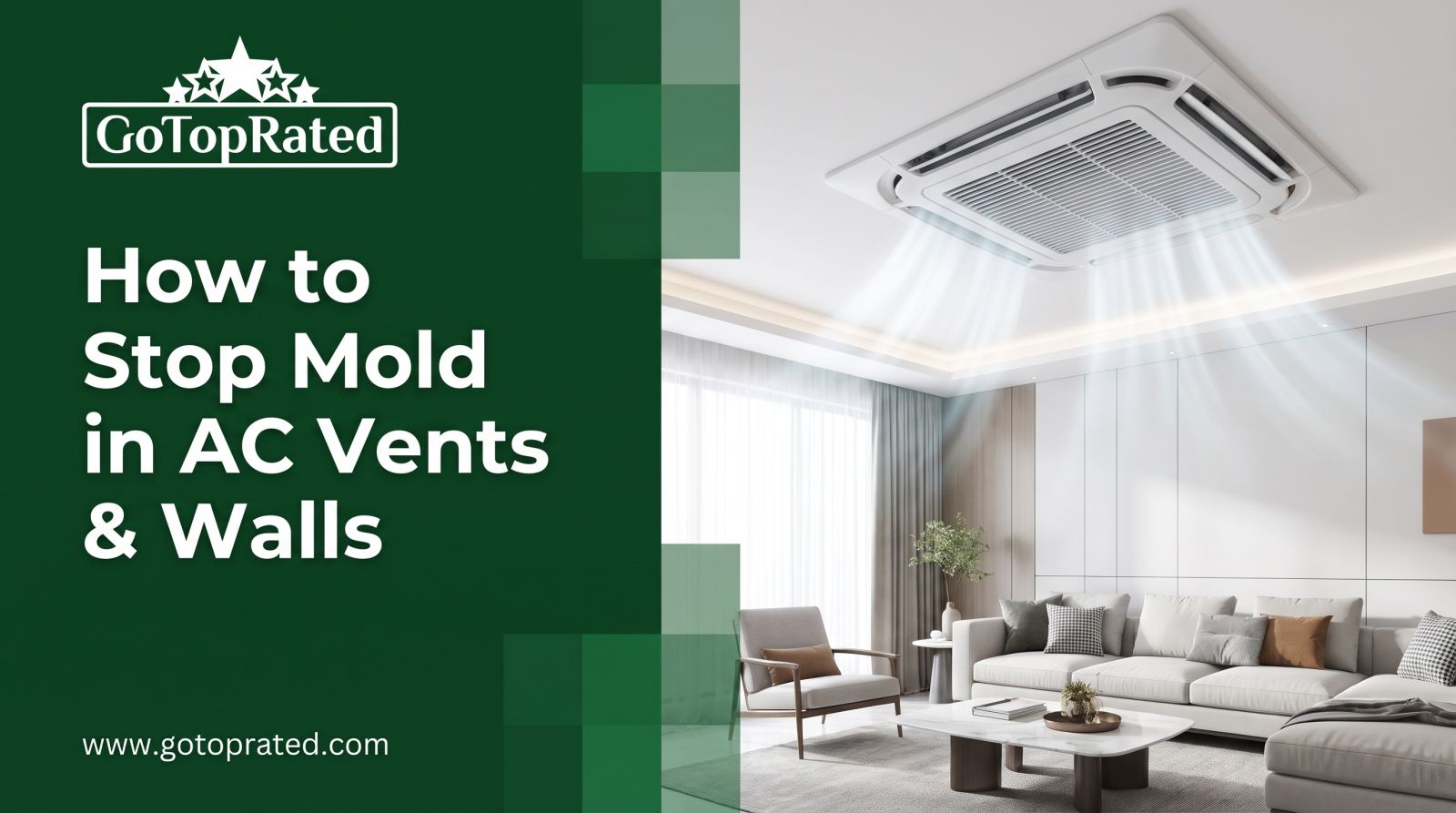
You glance up at your ceiling AC vent one afternoon and notice something you definitely didn't see last month — a ring of dark black or green spots creeping outward, paired with a faint musty smell that seems to hang in the air no matter how much you clean. It's an alarming thing to spot, and for good reason.
Mold isn't just a cosmetic issue. Left untreated, it spreads, damages walls and drywall, and can genuinely affect the air quality your family breathes every day. This guide walks through exactly why it happens in Dubai homes specifically, how to safely deal with visible spots yourself, and when the problem has moved beyond what a DIY clean can actually fix.
Why Mold Thrives in Dubai Homes
The science behind it is pretty simple once you break it down. Dubai's outdoor air carries a lot of humidity, and when that warm, moist air meets the cold surfaces created by your AC system, it condenses — meaning tiny water droplets form on those cool surfaces. That condensation is exactly what mold spores need to take hold and start growing.
This happens most often in dark, low-airflow spots: inside AC ductwork, around vent covers, and on concrete or drywall surfaces near cold air paths. Add in Dubai's near-constant AC usage, and you've got a near-continuous supply of the temperature difference that drives condensation, day after day, month after month.
An AC system that isn't running efficiently makes this worse. Poor insulation on ducts, clogged filters, or a unit that's struggling to regulate temperature properly can all increase condensation buildup. If your AC has been acting up lately — weak airflow, inconsistent cooling, or unusual noise — it's worth having trusted AC repair services take a look before the mold problem gets any bigger, since fixing the system itself is often what stops new mold from forming in the first place.
Step-by-Step DIY Mold Removal for Surface Spots
If you're dealing with visible surface mold — small spots around a vent or a patch on a wall — here's how to handle it safely.
Step 1: Safety First
Before touching anything, put on a mask and gloves. Disturbing mold releases spores into the air, and inhaling them isn't something you want to risk, especially if anyone in the home has allergies or respiratory sensitivities. Open a window or door nearby for ventilation while you work if possible.
Step 2: Safe Cleaning Solution
Reach for white vinegar or a non-toxic, purpose-made mold spray rather than pure bleach. This surprises a lot of people, but bleach on porous surfaces like drywall only bleaches the visible color of the mold — it doesn't actually kill the roots growing inside the porous material. The mold often returns within weeks, looking "cleaned" in the meantime while still very much alive underneath.
- Spray the affected area generously with white vinegar (undiluted works best for mold) or your chosen non-toxic solution
- Let it sit for 10–15 minutes to break down the mold structure
- Scrub gently with a soft brush or cloth, working from the outer edge of the spot inward
- Wipe away residue with a clean, damp cloth
Step 3: Moisture Removal
This step is just as important as the cleaning itself, since leftover moisture just invites the mold right back.
- Dry the cleaned surface thoroughly with microfiber towels
- Run a dehumidifier in the room for a few hours afterward to pull residual moisture out of the air
- Keep the area well-ventilated for the next day or two while everything fully dries
Skipping this step is one of the most common reasons mold reappears in the same spot within a few weeks of cleaning.
4 Essential Rules to Prevent Mold from Returning
Cleaning existing mold only solves half the problem. Preventing it from coming back means addressing the conditions that caused it in the first place:
- Keep indoor AC temperatures consistent, ideally around 22–24°C — big swings between very cold indoor air and hot outdoor air increase thermal shock condensation on walls and vents
- Leave bathroom exhaust fans running during and for at least 15–20 minutes after hot showers, giving trapped humidity somewhere to escape instead of settling into nearby walls
- Regularly check window seals and door gaskets for gaps or wear, since these are common, overlooked entry points for humid outdoor air to seep in and condense indoors
- Replace AC filters every 1 to 3 months — a clogged filter restricts airflow and increases condensation buildup inside the system itself
Sticking to these habits consistently makes a bigger long-term difference than any single deep clean.
When DIY Isn't Enough: Deep AC Duct & Mold Remediation
Here's the part most homeowners don't realize: the mold spots you can actually see on a wall or vent cover are often just a small fraction — roughly 10% — of the total problem. The remaining 90% is typically hiding inside the AC ductwork itself, spreading through dark, humid channels you'll never see without professional inspection.
This hidden growth is exactly why persistent musty smells or recurring surface mold, even after a thorough clean, usually points to duct contamination rather than a simple wall issue. Addressing it properly requires:
- Commercial fogging to treat mold spores throughout the entire duct system, not just accessible surfaces
- Antibacterial sanitization to eliminate bacteria and spores lingering inside the ductwork
- Specialized coil cleaning to remove condensation-trapping grime directly from the AC coils, addressing the root cause of the moisture buildup
If your mold keeps returning despite regular cleaning, this is the level of treatment that actually solves it for good.
Conclusion
Catching mold early and dealing with it properly protects both your family's health and your home's structure — leaving it unaddressed leads to spreading damage and, eventually, expensive drywall repairs that go well beyond a simple cleaning. Combine consistent prevention habits with a proper deep clean when needed, and you're looking at a genuinely mold-free home rather than one that just looks clean on the surface.
If mold keeps coming back no matter how often you clean it, the problem is likely deeper than what a DIY approach can reach. Head over to GoTopRated to find top-rated, certified AC cleaning and mold remediation experts in Dubai who can solve it at the source.
.jpeg)